


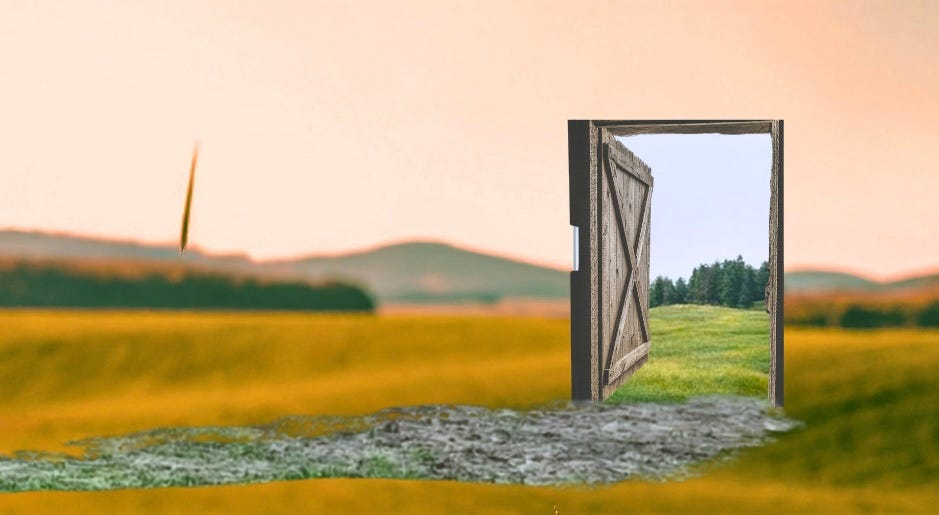
What if it’s not broken? We’re trained to fix. To patch. To return things to the comfort of what once worked.
But sometimes, the old path isn’t wrong. It’s just finished.
That’s what this week’s fiction explores.
Not collapse, but a quiet change.
Not drama, but adjustment.
If something in your life has stopped flowing, this story is for you.
1️⃣ The Shift
Riley noticed the change because she walked the canyon every morning.
About halfway down the usual route, where the wall curved inward and held the night’s cool a little longer, the ground no longer felt right. The gravel slid under her boot instead of holding. The slope pulled in a way it hadn’t before.
She stopped and looked around. The canyon itself looked the same. Same walls. Same scrub. Same quiet.
Only the path had shifted.
Riley assessed it the way she always did. Angle. Drainage. What the last storm might have done. It wasn’t dangerous. Not yet.
She felt a brief hesitation in her body, a tightening she didn’t have a name for. She stepped past it and kept going.
At breakfast she mentioned it to Val, casually.
“Part of the canyon path slipped,” she said.
Val looked up. “Which section?”
Riley told her.
“I’ll walk it tomorrow,” Val said.
The canyon sat outside the windows, unchanged, as if it had nothing to add.
2️⃣ The Canyon Resists
Val went early, before the sun reached into the canyon.
She followed Riley’s route until she felt the shift under her own feet. The canyon wall rose close on one side, rock dark and cool. The ground there had thinned, the gravel no longer settled the way it should.
Val knelt and touched the soil. She didn’t think of it as damage. She thought of it as imbalance.
She gathered flat stones and reset the edge of the path, reinforcing the section that had slipped. It took time, but by late morning the canyon path looked stable again.
That evening, Val felt satisfied in the quiet way she trusted.
The next morning, she returned.
The stones had moved. Not far. Just enough. The canyon path had softened again in the same place.
Val stood there longer this time. The canyon wasn’t dramatic about it. It hadn’t washed the work away. It had simply declined to hold it.
Later, she told Riley, “It didn’t stay.”
Riley nodded. She didn’t ask why.
3️⃣ Standing in the Canyon
They stood together where the path narrowed, canyon walls rising on either side.
Riley talked through solutions. A wider cut. A more permanent grade. Something that would hold, no matter what the canyon did next.
“It’s workable,” she said. “I can make it solid.”
Val listened, eyes on the ground, then on the rock face beside them.
“Why this path?” she asked.
Riley answered quickly. It was efficient. Familiar. It had always been the best way through this part of the canyon.
As she spoke, she felt something tighten in her chest. She kept going anyway.
Val didn’t argue. She didn’t agree either.
The canyon stayed quiet. Wind moved higher up, out of reach.
4️⃣ How Heavy is Waiting?
Riley drew the plan that afternoon.
It would solve the problem. It meant cutting deeper into the canyon slope and redirecting how they moved through that section. Not a disaster. Just a change they’d feel every day.
Val studied the drawing. She felt her usual instinct rise, the one that wanted to soften the impact, to suggest an alternative.
She noticed the instinct and let it pass.
Riley watched her, waiting for a response. The lack of one landed heavier than approval would have.
Outside, the canyon held its shape. No signal. No resistance. No permission.
Today’s Dose of Fiction
You’re Not Broken — The Path Just Changed
5️⃣ Moving Through the Canyon
They didn’t talk it through again.
They took a different route through the canyon instead. Longer. Less direct. It required more attention, more pacing.
After a few days, it stopped feeling like a decision and started feeling like reality.
The original path remained unreliable. Not blocked. Just uninterested.
Riley noticed how often her body had registered a change before she’d allowed herself to consider it.
Val noticed how often she’d stepped in out of habit, not necessity.
The canyon didn’t change. But it breathed more easily.
They moved through it differently now, enjoying the fresh breeze, knowing they would listen more closely to what they felt before trying to make it cooperate.

A familiar path in Echo Canyon stops holding the way it always has. Nothing dramatic happens. No collapse. No danger. Just a quiet refusal to cooperate.
Riley’s instinct is to fix it. Val’s instinct is to stabilize it. Neither approach works. Over the course of the week, they stop trying to force a solution and instead adjust how they move through the canyon.
The shift isn’t external. The canyon stays the same. The change happens in how they listen to their bodies and instincts, and the limits they’ve been overriding.
Interesting story. I'm reminded sometimes it is better to step back and look at other ways of doing things. The first way isn't always the best. I've seen my own property make adjustments of its own that need no help from me. For example, the way the sand shifts after a heavy rain. I like how Val and Riley decided to walk a different path.